
Share This Article
Parking in urban Indian apartment buildings is scarce, contested, and frequently mismanaged. Someone parks in your allocated spot. The society decides to charge extra for parking that was included in your purchase. A tenant finds out the parking they were promised is not in the agreement.
These are some of the most common and most frustrating apartment disputes in India. Here are the rules — and what you can do when they are violated.
Table of Contents
The RERA Ruling on Parking Ownership {#rera}
The Real Estate (Regulation and Development) Act, 2016 — RERA — brought significant clarity to the question of parking ownership in apartment buildings.
RERA mandates that developers must clearly specify parking space details in the agreement. It also confirmed that open parking spaces — surface-level parking areas that are not enclosed — cannot be sold separately to individual flat owners. They are common amenities to be used by all residents.
Covered parking spaces — garages, covered slots, or basement parking that are constructed as enclosed areas — can be allocated to specific flat owners and may be included in the sale deed.
This means: if your apartment building has open surface parking, the society cannot sell or allocate those spots exclusively. They must be shared among residents or allocated on a fair rotational or first-come basis. If the building has covered parking, each spot’s ownership or allocation should be documented in the flat’s sale deed or lease.
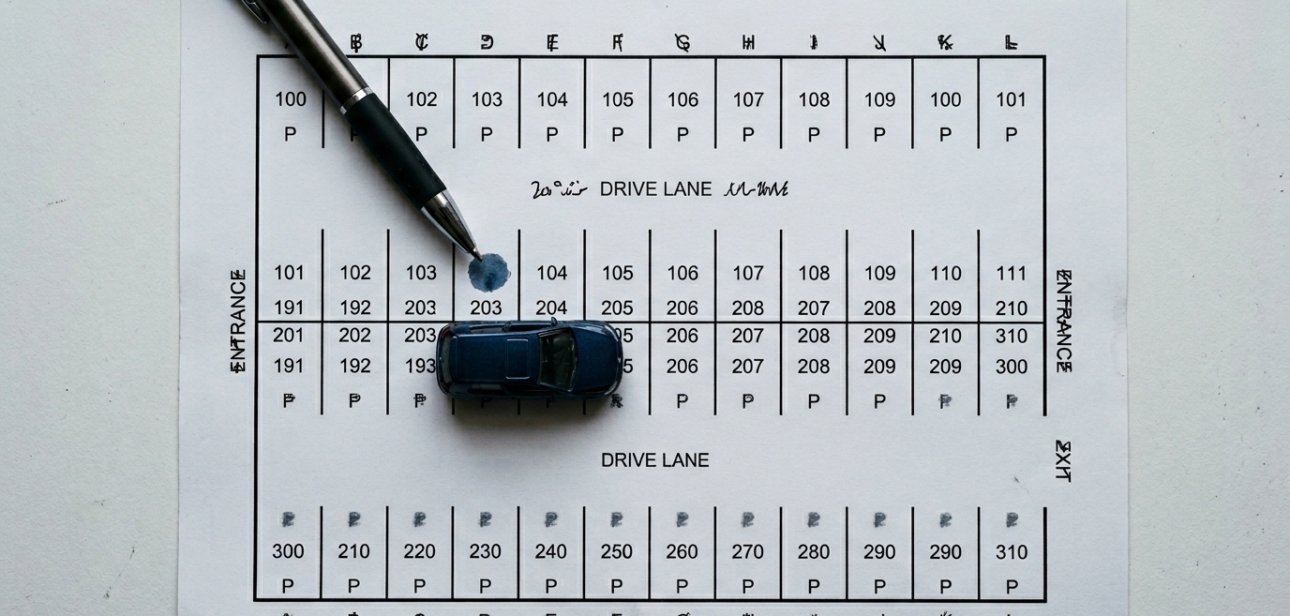
Allocated vs Common Parking {#allocated-vs-common}
[IMAGE BLOCK 2 — Mid-article]
Allocated parking: A specific parking space that is assigned to a particular flat — either by the developer’s plan, the flat’s sale deed, or the society’s allocation record. If you have an allocated spot, you have the right to use it exclusively during your tenancy (if the landlord’s parking is part of the rental arrangement).
Common parking: Shared areas where there is no permanent allocation — first come, first served. In buildings with common parking, no single resident can claim an exclusive right to a particular spot.
Problems arise when residents treat a common spot as “theirs” simply because they have parked there consistently. This is not a legal right — it is habit. The RWA can reassign common spots as needed.
What Societies Can Charge for Parking {#charging}
Societies can charge residents for parking in covered or allocated spots — this is typically included in the maintenance fee or charged separately. The charge must be approved at the AGM and applied equally to all residents using the same type of parking.
What societies cannot do:
Charge for parking that was included in the flat’s sale deed as part of the purchase price — the Supreme Court has held that separate parking charges on already-purchased parking are not valid. Charge different amounts to tenants versus owners for the same parking allocation — this is discriminatory and challengeable. Introduce new parking charges mid-year without AGM approval.
Tenant Parking Rights {#tenant-rights}
As a tenant, your parking rights depend on what your rental agreement says. Specifically:
If the landlord’s flat has an allocated parking space, verify whether it is included in your rental arrangement. If it is — ensure this is stated in the agreement, not just verbally promised. If it is not included — clarify what parking arrangement is available to you. If there is no parking included and the building has common parking, you have the same right as any other resident to use available common spots on a first-come basis.
Before committing to a flat, ask: is parking included in the rent or charged separately? Is there an allocated spot for this flat, and if so, which one? What is the monthly parking charge if separate?
Get the answers in writing in the agreement.
Related read: Things to check before renting a house India ?
Resolving a Parking Dispute {#resolving}
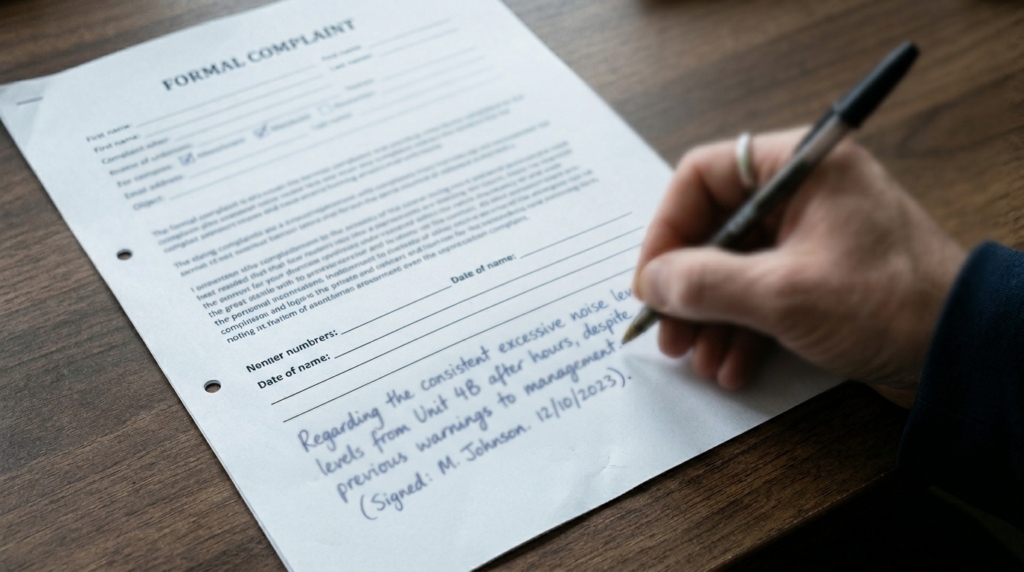
For disputes between residents — someone blocking your allocated spot, someone consistently occupying a common spot you use — the first step is a written complaint to the RWA Secretary with the date, time, and vehicle registration number of the violation.
The RWA has authority to issue notices, impose fines under their bye-laws, and arrange towing if the society has such provisions. Most parking disputes are resolved at this level.
If the RWA is unresponsive or is itself the source of the dispute — imposing charges that are not AGM-approved or discriminating against tenants — escalate to the District Registrar of Co-operative Societies in your state, or file a consumer court complaint if the issue involves a financial charge.
For disputes involving RERA violations — particularly parking being sold or charged in ways that violate the Act — complain to the state RERA authority.
Common Parking Violations and What to Do {#violations}
Someone parked in your allocated spot: Photograph the vehicle and registration, send a written complaint to the RWA, and request they arrange removal. If urgent, call the vehicle owner via the building’s directory if available. Do not clamp, block, or damage the vehicle — this creates a counter-dispute.
Society imposing a new parking charge without AGM approval: Request the AGM minutes where the charge was approved. If they cannot produce them, write a formal objection to the RWA Secretary and District Registrar.
Landlord claiming parking is included in rent but no spot is allocated in the building: This is a mis-selling situation. Raise it with the landlord in writing, referencing what was agreed. If the parking is genuinely unavailable, it is a deficiency in the agreed-upon rental terms.
Final Thought
Parking is a small issue that creates disproportionately large conflicts in Indian apartment buildings — because it is tangible, daily, and contested in spaces where supply is chronically short.
Knowing the RERA position on open vs covered parking, what societies can charge, and how to use the RWA process effectively turns a frustrating dispute into a manageable one.
Navigate every aspect of apartment living in India. Browse our full guide library ?