
Share This Article
Noise in a shared apartment building is one of the most common quality-of-life complaints in Indian urban living. Most people either suffer in silence or escalate immediately to conflict — skipping the effective middle steps that actually resolve the problem.
Here is the right process — from a polite first conversation to a formal noise complaint with the police.
Table of Contents
Know the Noise Rules First {#noise-rules}
India’s noise pollution rules are governed by the Noise Pollution (Regulation and Control) Rules, 2000 — framed under the Environment Protection Act, 1986. These set ambient noise level limits by zone and time of day.
For residential areas the permissible limits are: 55 decibels during the day (6am to 10pm) and 45 decibels at night (10pm to 6am).
Most housing societies also have their own noise restriction rules — typically prohibiting loud music, parties, or construction work after 10pm and before 8am. Check your society’s bye-laws for the specific timings.
Step 1 — Talk to the Neighbour Directly {#talk-first}
[IMAGE BLOCK 2 — Mid-article]
Before escalating to any authority, attempt a direct conversation. Most noise problems — particularly those involving parties, music, or noisy children — are unintentional. The neighbour may simply not realise the extent of the disturbance.
Approach the conversation calmly and at a neutral time — not in the middle of the noise, when you are at peak frustration. Explain specifically what you are hearing and when. Most people respond reasonably to a polite, specific request.
If you are uncomfortable with a face-to-face conversation, a written note slipped under the door can be equally effective — less confrontational and also creates a record.
Step 2 — Complain to the RWA {#rwa-complaint}
If a direct approach does not resolve the issue — or if the noise is recurring despite a first conversation — the next step is a formal complaint to your Resident Welfare Association.
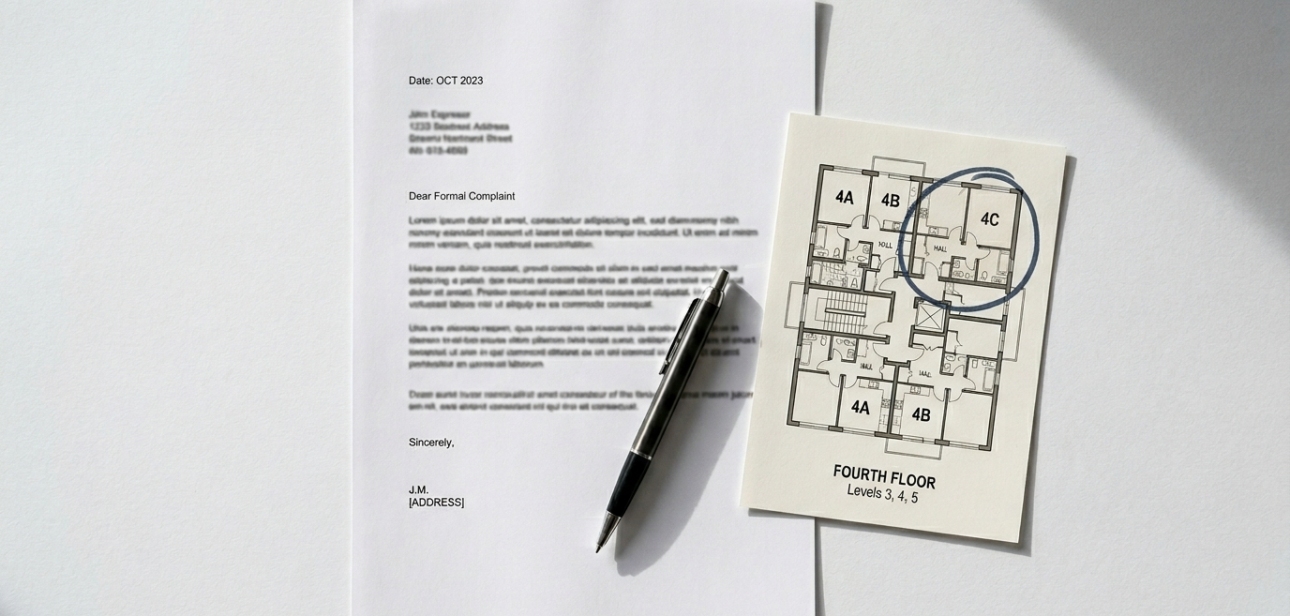
Write a complaint — email to the RWA Secretary is sufficient — stating the nature of the noise, the dates and times it occurred, and that a direct approach has not resolved it. Request that the RWA take action under the society’s bye-laws.
Most RWAs have authority to issue written warnings to offending residents, impose fines under their bye-laws, and escalate to the local authority if the violation continues. An RWA complaint also creates a documented record — useful if the matter escalates further.
Related read: Society rules for tenants in India ?
Step 3 — Contact the Local Police {#police}
For noise disturbances at night — after 10pm — calling the local police is legally appropriate and often effective. Police can issue warnings and require the noise to stop immediately.
You can call 100 (Police helpline) or your local police station number for non-emergency noise complaints. Provide the address of the noisy residence and the nature of the disturbance. Police response time varies by city and area.
In many cities, local police have dedicated community relations cells that handle noise complaints from residential areas. A pattern of calls about the same address builds a record and increases the seriousness of the response.
Step 4 — File a Formal Noise Pollution Complaint {#formal-complaint}
For persistent noise problems that do not resolve through RWA and police intervention, a formal noise pollution complaint can be filed with:
Local Municipal Corporation — most municipal corporations have an environment or public health department that handles noise pollution complaints. File a written complaint with the details and any documentation.
State Pollution Control Board — for serious violations by commercial establishments or construction near residential areas.
Magistrate Court — for ongoing, documented noise violations that create a public nuisance, a complaint under Section 133 of the Code of Criminal Procedure can compel a court order to stop the noise.
Documenting Noise — Why It Matters {#documenting}
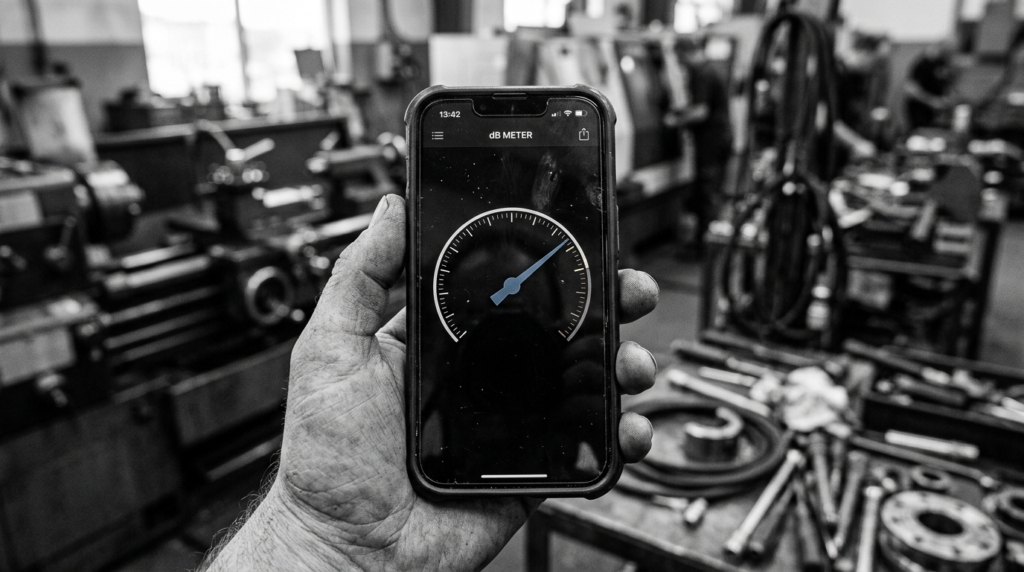
Before escalating to any formal complaint, document the noise. A noise complaint that says “it’s loud upstairs” is less effective than one that says “music above 60 decibels was recorded on the attached audio file between 11pm and 2am on these five dates.”
Use your smartphone to record audio during noise events — note the date, time, and duration. There are free decibel meter apps (SPLnFFT, Decibel X) that measure sound levels and log readings. Screenshots of WhatsApp messages where you asked the neighbour to stop and received no response are also useful evidence.
Special Situations — Events, Construction, Pets {#special}
Building events or festivals: Festival noise — Diwali, Ganesh Chaturthi, holi, etc. — has cultural context that courts and police handle differently. The Supreme Court has ruled that no one has a fundamental right to use amplifiers or loudspeakers that infringe on others’ rights to sleep and peace. Complaints about festival noise at excessive hours are valid.
Construction noise: Construction work in residential areas is restricted to daytime hours in most cities — typically 6am to 10pm. Night construction near residential buildings without special permission is a violation reportable to the municipal corporation.
Pets: Persistent dog barking is covered under noise pollution rules. An RWA complaint is the most effective first step — followed by a police complaint if it continues.
Final Thought
Most noise problems in Indian apartments are resolved at Step 1 — a polite direct conversation. The steps after that exist for the situations where that does not work. The key is to escalate systematically — with documentation — rather than either suffering indefinitely or jumping straight to conflict.
Dealing with apartment living challenges. Browse our full guide library ?