
Share This Article
Moving into a new rental flat means inheriting whatever electricity arrangement the previous tenant left behind. In most cases, the connection is in the landlord’s name — and most tenants never change it.
But sometimes you need the connection in your own name. For address proof. For HRA documentation. For a more transparent billing relationship. Or simply because the landlord prefers it.
Here is when to do it, when not to, and the exact process for India’s major electricity boards.
Table of Contents
Should You Transfer the Connection? {#should-you}
There are good reasons to transfer and good reasons not to.
Reasons to transfer: You need the electricity bill in your name for address proof — for bank KYC, voter registration, or other official purposes. The landlord prefers the connection in the tenant’s name to avoid being responsible for arrears. You want complete transparency over your own consumption and billing with no intermediary.
Reasons not to transfer: Transfers involve paperwork, a security deposit to the electricity board, and the hassle of transferring back when you leave. For short tenancies — under 12 months — the transfer and reverse process may not be worth the effort. Many electricity boards require a No Objection Certificate from the landlord — if the relationship is difficult, this adds friction.
For most 11-month tenancies in India, leaving the connection in the landlord’s name and maintaining careful payment records is the simpler approach.
Documents Required {#documents}
[IMAGE BLOCK 2 — Mid-article]
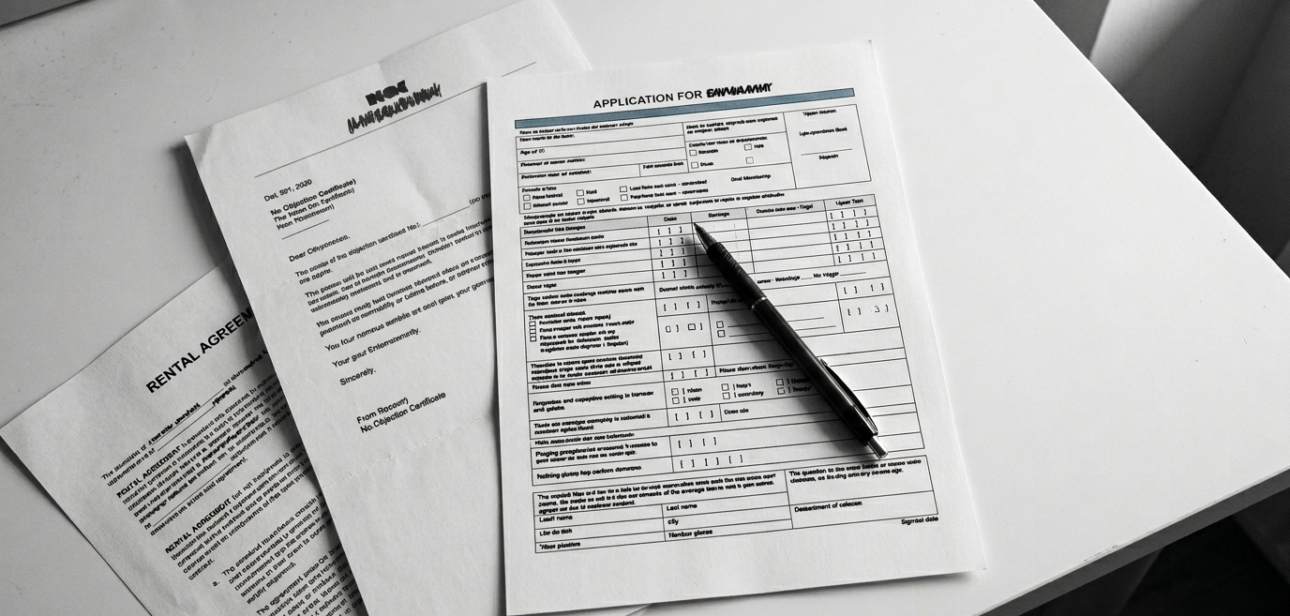
Across most electricity boards in India, the standard documents for a name transfer or new connection in a tenant’s name include:
Application form — available at the DISCOM office or downloadable from the official portal. Copy of the rental agreement — establishing the tenant’s right to occupy the property. No Objection Certificate from the landlord — confirming they consent to the connection being in the tenant’s name. Tenant’s identity proof — Aadhaar, PAN, or passport. Tenant’s address proof — rental agreement or a document confirming the address. Passport-sized photographs — typically two. Previous bill copy — to identify the existing connection details. Security deposit — most electricity boards require a refundable deposit for a new connection in a tenant’s name. The amount varies by state and sanctioned load.

General Transfer Process {#general-process}
The general process across most electricity boards follows these steps:
Obtain a No Objection Certificate from your landlord — this is the most critical step and the one most likely to create friction. Download and complete the name change or new connection application form from your electricity board’s official portal. Gather all required documents. Visit the nearest DISCOM customer service centre with all documents and the security deposit. Submit the application. A meter inspection may be scheduled — an official visits the property to verify the meter and sanctioned load. Once approved, the new bill is issued in the tenant’s name. This process typically takes seven to thirty days depending on the electricity board.
BESCOM — Karnataka {#bescom}
Portal: bescom.org ? Consumer Services ? New Connection / Name Change
BESCOM requires the landlord’s NOC, the rental agreement, Aadhaar of the tenant, and the existing consumer number. The security deposit for BESCOM is calculated based on sanctioned load — typically ?500 to ?2,000 for a standard residential connection.
Applications can be submitted online through the BESCOM portal or in person at any BESCOM customer service centre.
MSEDCL — Maharashtra {#msedcl}
Portal: mahadiscom.in ? Consumer Services ? Temporary Connection / Name Change
MSEDCL allows online application for name transfer. The landlord’s NOC and rental agreement are required. Security deposit is calculated at ?500 to ?3,000 for residential connections depending on load.
BSES / TPDDL — Delhi {#delhi}
BSES: bsesdelhi.com ? Services ? New Connection
TPDDL: tatapower-ddl.com ? Services ? New Connection
Delhi’s electricity boards require landlord NOC, rental agreement, identity proof, and a security deposit. The process is generally in-person at the divisional office.
TANGEDCO — Tamil Nadu {#tangedco}
Portal: tneb.in ? Consumer Services ? New Service Connection
TANGEDCO applications are typically processed at the local section office. Online applications are possible for some categories. NOC from landlord and rental agreement are standard requirements.
Important Precautions for Tenants {#precautions}
Always check for outstanding arrears on the existing connection before agreeing to take over or transfer a connection. You should not inherit someone else’s unpaid electricity dues. Ask the landlord to show the last three months’ paid bills before any transfer.
When you vacate, remember to reverse the transfer — apply to disconnect or transfer the connection back. If you leave without doing this, bills will continue to arrive in your name for the address you no longer occupy.
Keep the security deposit receipt carefully — it is refundable when you close or transfer the connection.
Related read: Things to check before renting a house India ?
Final Thought
Transferring an electricity connection as a tenant is a straightforward process — when the landlord is cooperative. The NOC is the deciding factor. If you have a good relationship with your landlord and a legitimate reason to transfer, the process is manageable. If the relationship is difficult, leaving it in the landlord’s name and maintaining your own payment records is the easier path.
More practical tenant guides for India. Browse our full library ?