
Share This Article
The flat is good. The landlord is reasonable. The commute works. And then there is the neighbour.
Noise at 1am. Parking in your spot. Hostile encounters in the corridor. Harassment that started mild and has escalated. A bad neighbour situation is one of the few rental problems that cannot be solved by reading your agreement more carefully.
Here is how to handle it — systematically, with documentation, and without making things worse.
Table of Contents
Identify the Type of Problem First {#identify}
Neighbour problems broadly fall into four categories — and the response differs slightly for each:
Nuisance — noise, smells, waste mismanagement, common area misuse. These are RWA-addressable issues. Property boundary violations — parking in your spot, leaving items in your doorway, encroaching on common space. RWA-addressable with a police escalation path. Personal harassment — hostile interactions, verbal abuse, intimidation, unwanted messages. Police-addressable. Criminal behaviour — threats of violence, physical assault, damage to your property. Immediately police-addressable.
Knowing which category your situation falls into tells you where to start and how quickly to escalate.
Step 1 — Try a Direct, Calm Approach {#direct}
For nuisance issues — noise, parking, common area — a direct conversation often resolves the problem faster than any formal process. Many neighbour problems are unintentional and immediately corrected when raised calmly.
The approach matters more than the words. Choose a neutral time — not mid-conflict. Be specific about the issue, not accusatory about the person. Propose a solution, not just a complaint.
If you are uncomfortable with face-to-face contact, a written note is equally effective — and creates a record. If the problem is serious enough that direct contact feels unsafe, skip this step entirely and go to Step 2.
Step 2 — Involve the RWA {#rwa}
For nuisance and property boundary issues that direct contact has not resolved — or for any issue where you feel direct contact is inappropriate — the RWA is the next step.
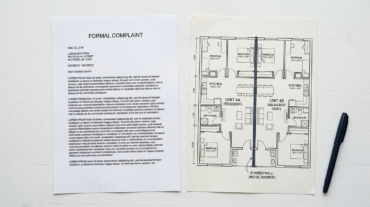
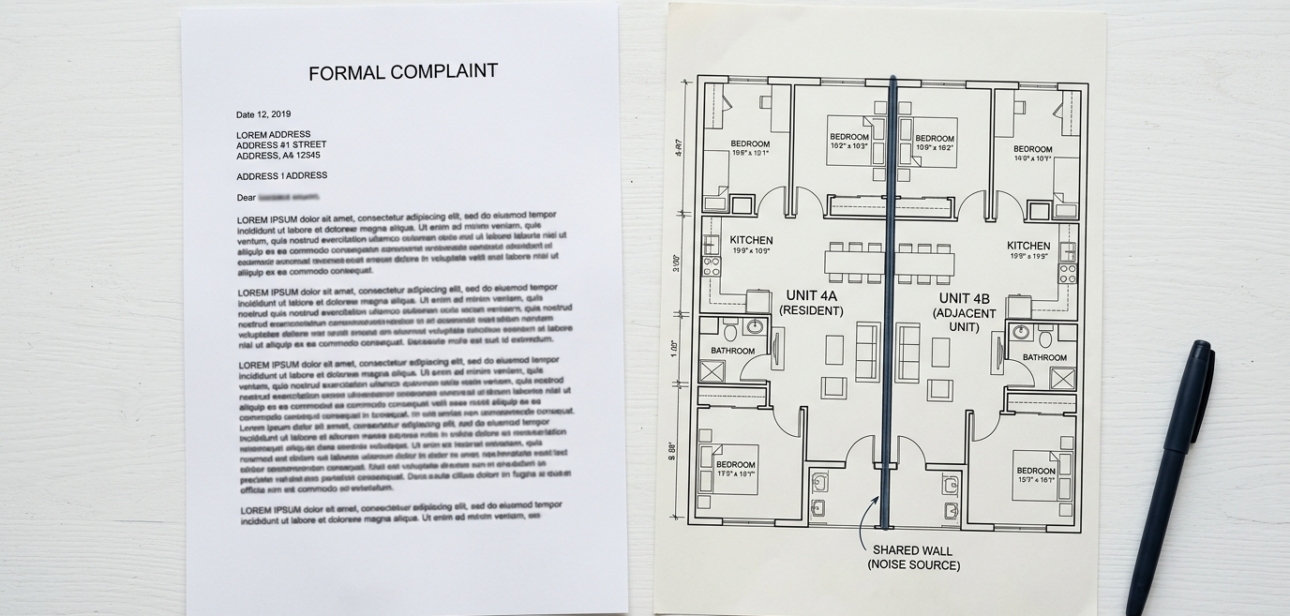
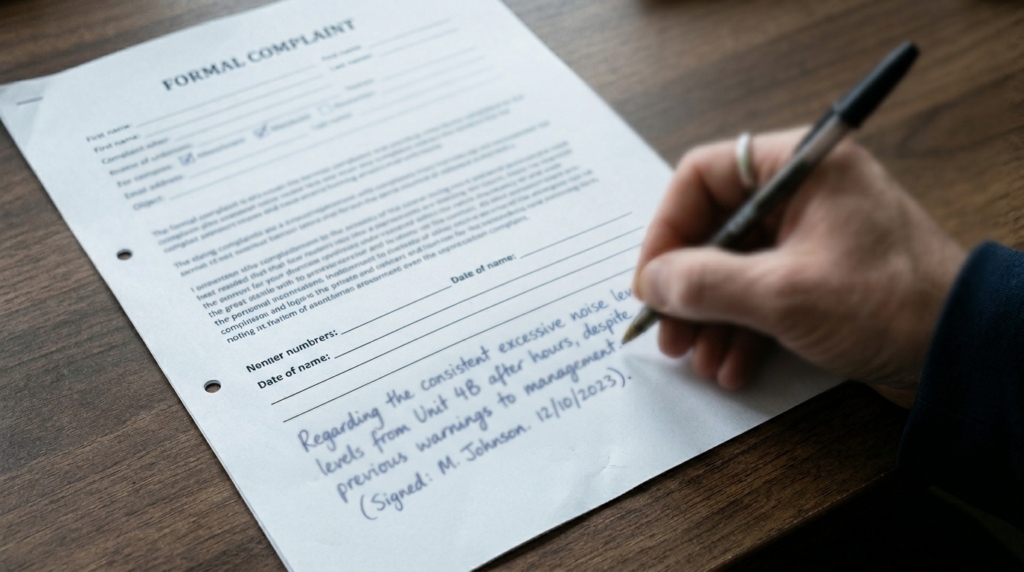
Write a formal complaint email to the RWA Secretary. Be specific: date, time, nature of the issue, what happened when you addressed it directly (if you did), and what you are requesting the RWA do.
The RWA has the authority to: issue a written warning to the neighbour, impose a fine under the society’s bye-laws, and escalate to the local authority if the violation continues.
Document every complaint you file — date, what was said, any response received. This trail is important if the matter escalates.
Related read: Noise complaint apartment India ?
Step 3 — Contact the Police {#police}
For harassment, verbal abuse, threats, or any behaviour that feels unsafe — contact the police without hesitation. You do not need to exhaust the RWA process first if the situation involves personal safety.
File a complaint at the local police station under the relevant sections — criminal intimidation (Section 503 IPC), abuse and harassment (Section 504 IPC), or wrongful restraint (Section 341 IPC) as applicable.
For any physical assault — even minor — file an FIR immediately.
Document the harassment before going to the police if possible — voice recordings, text messages, photographs of damage or encroachment. This strengthens the complaint significantly.
For tenants from northeastern states in Delhi, SPUNER — the Special Police Unit for the North East Region — provides specific support for harassment cases. Helpline: 1093.
Step 4 — Legal Remedies {#legal}
For persistent harassment that police intervention has not resolved, civil legal remedies include:
Injunction — a court order restraining the neighbour from specific behaviour. This is obtained through a civil court and is particularly effective for ongoing harassment or property boundary violations.
Suit for nuisance — a civil suit based on the legal principle of private nuisance — that the neighbour’s behaviour is substantially interfering with your use and enjoyment of your property.
Consumer court — if the building management or RWA is failing in its duty to maintain peace in the building, a consumer court complaint against the society as a service provider is possible in some circumstances.
When You Are the Tenant — Special Considerations {#tenant-specific}
As a tenant rather than an owner, your relationship with the RWA is slightly different. You operate through your landlord in some respects — your landlord is the society member who has voting rights and the formal standing to raise issues.
If the RWA is dismissive of your complaints because you are a tenant rather than an owner — inform your landlord and request that they raise the matter formally. A landlord who refuses to support a tenant’s legitimate complaint about a serious neighbour problem is creating a habitability issue that may give grounds for early exit from the tenancy.
When to Consider Moving {#moving}
Some neighbour situations do not resolve regardless of the steps taken. If you have exhausted all available remedies and the problem continues — and it is significantly affecting your quality of life — moving may be the practical solution.
This is particularly true in tenancies with short remaining terms. For a three-month period, the legal and emotional cost of pursuing a persistent neighbour problem through courts may exceed the cost of moving to a better situation.
Make this decision rationally: document the problem for your own records, give proper notice to your landlord, and move. Your mental health and daily peace matter more than winning a neighbour dispute.
Final Thought
Most neighbour problems in Indian apartments resolve at Step 1 or 2. The escalation steps exist for situations where they do not. The key across all of them is the same: stay calm, stay specific, and document everything.
Conflict that is managed with documentation and process is far more likely to resolve than conflict managed with emotion and escalation.
Everything you need for apartment living in India. Browse our full guide library ?