
Share This Article
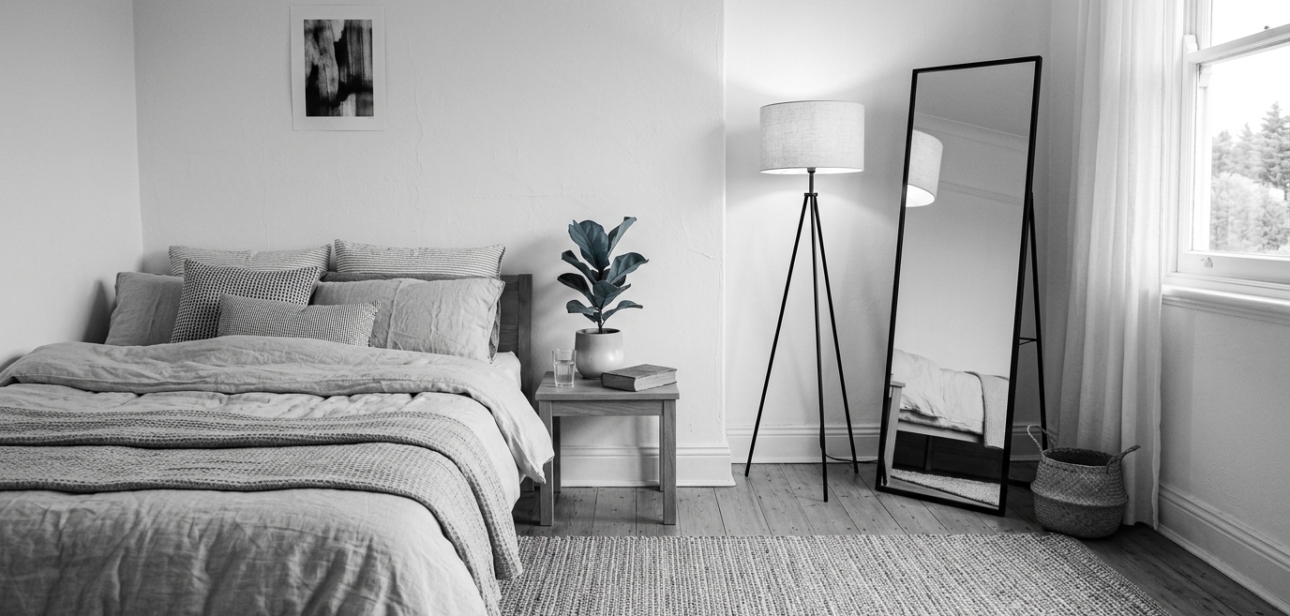
A 100 square foot bedroom in a Bengaluru 1BHK. A 120 square foot room in a Mumbai flat. A narrow rectangle in a Delhi apartment where the door almost touches the bed.
Small bedrooms are the norm in Indian urban rentals — not the exception. And designing them well is less about aesthetics and more about making every square foot work harder.
Here are ten ideas that cost little, require no permanent changes, and genuinely improve how a small bedroom looks and functions.
Table of Contents
1. Use Vertical Space for Storage {#vertical}
Most small bedroom storage mistakes happen horizontally — wide wardrobes, low shelves, items spread across the floor. In a small room, vertical is your friend.
Install floating shelves above the bed or beside the wardrobe for books, accessories, and items that would otherwise pile up on surfaces. Use hooks on the back of the bedroom door for bags, belts, or jackets. A tall, narrow wardrobe uses significantly less floor area than a wide, low one for the same storage capacity.
In rental flats, wall-mounted shelves are the most common point of landlord concern. Use adhesive wall anchors or tension-rod shelf systems where drilling is not permitted. Always check your agreement before making any wall fixtures.
2. Choose a Bed with Storage Underneath {#bed-storage}
[IMAGE BLOCK 2 — Mid-article]
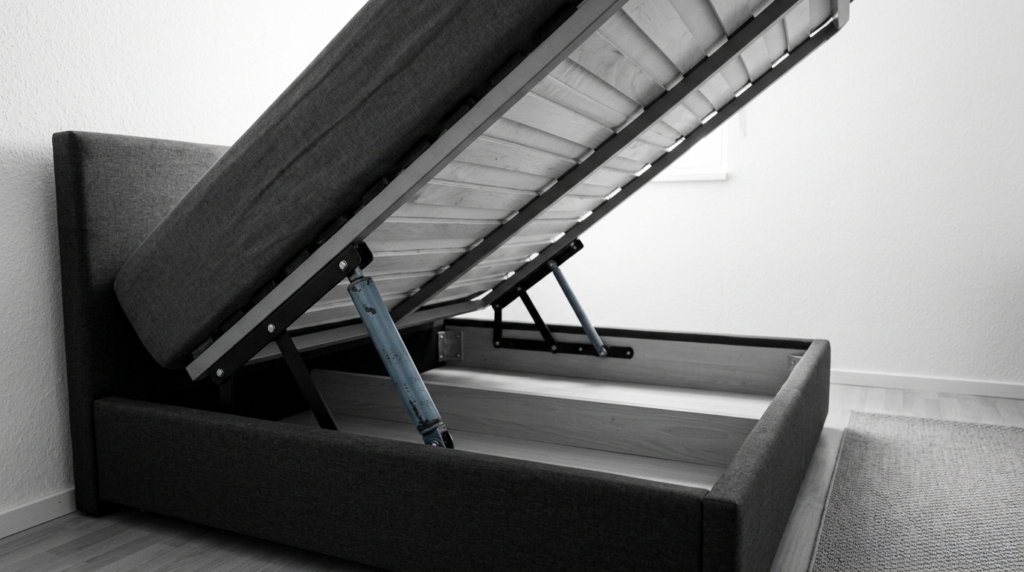
The space under the bed is one of the most underused areas in a small bedroom. A hydraulic storage bed — where the mattress lifts on a gas mechanism to reveal a storage box underneath — provides significant additional storage without adding any floor area.
In India, these beds are widely available in the ?15,000 to ?40,000 range from stores like Pepperfry, Urban Ladder, IKEA (in cities where available), and local furniture markets. For rentals, check whether furniture can be left behind when you move or whether you will need to transport it.
If a new bed is not feasible, use under-bed storage boxes on wheels — these organise items that would otherwise be scattered across the room and are easy to relocate.
3. Use Light Colours on Walls {#light-colours}
Light colours make rooms look larger because they reflect more light. Dark colours absorb it and make spaces feel smaller and more enclosed.
For a small rental bedroom where you cannot paint the walls, the principles still apply through other means — light-coloured bedsheets, curtains, and rugs reflect more light than dark ones. A white or cream-coloured wardrobe appears to recede into the room rather than dominate it.
If your landlord permits painting, off-white, light grey, sage green, or a pale warm beige are all tones that make small rooms feel more expansive. Avoid deep colours on all four walls — if you want a feature wall, limit it to one.
4. Mirrors to Add Visual Space {#mirrors}
A well-placed mirror doubles the apparent depth of a room by reflecting the opposite wall. In a small bedroom, a full-length mirror on one wall — particularly opposite a window — makes the space feel considerably larger.
A mirror on a wardrobe door is the most common implementation and the most landlord-friendly — no installation required.
Avoid multiple small decorative mirrors scattered around the room. One large mirror has a far stronger visual impact than several small ones.
5. Reduce Furniture to Essentials {#reduce-furniture}
This is the hardest advice to follow and the most effective. In a small bedroom, every piece of furniture that does not earn its floor space makes the room feel more crowded.
Essentials: bed, one or two bedside surfaces (even a small stool suffices), wardrobe or clothing storage, study space if you work from home. Non-essentials in a small room: oversized dressers, armchairs, decorative tables that hold nothing, multiple small stands.
Apply a simple test to each piece of furniture: does this make the room function better, or does it just fill space? Remove everything that fails the test. Store items you cannot remove.
6. Use Multi-Function Furniture {#multi-function}
A bedside table with drawers doubles as storage. An ottoman at the foot of the bed provides seating and storage. A foldable desk that mounts to the wall or folds against the wardrobe creates a work surface without occupying permanent floor area.
In Indian markets and online platforms, compact multi-function furniture is increasingly available at accessible prices. These pieces are especially valuable in rental flats where floor area is limited and permanent alterations are not permitted.
7. Keep Cables and Clutter Off the Floor {#floor-clear}
Nothing makes a small room feel smaller than a cluttered floor. Visible floor area creates the perception of space — even when the room has not changed.
Use cable management clips or channels to route phone chargers, laptop cables, and other wires along the wall or furniture rather than across the floor. Install a power strip on the wall or attach it to the side of the bed frame to eliminate floor-level tangles.
A daily habit of keeping the floor clear has a bigger impact on how a room feels than most design interventions.
8. Use Curtains Strategically {#curtains}
Floor-to-ceiling curtains hung close to the ceiling — not at window height — make the ceiling appear higher and the room more expansive. This is one of the most impactful and least expensive small bedroom design interventions available.
In a small bedroom, a single curtain rod installed close to the ceiling with curtains that fall to the floor can transform the perceived proportions of the room significantly.
Light, semi-sheer curtains maximise daylight and visual space. Blackout curtains are practical for sleeping but make the room feel smaller when closed — consider a double-layer approach where sheer inner curtains stay open and blackout outer curtains are used only for sleeping.
9. Lighting Layering {#lighting}
Most Indian rental bedrooms come with a single overhead light that creates a flat, slightly institutional feeling. Adding secondary light sources — a bedside lamp, a clip-on reading light, an LED strip along the back of a shelf — creates warmth, visual depth, and a sense that the room has distinct zones.
Warm white (2700K-3000K) lighting makes small rooms feel cosier. Cool white (5000K+) makes them feel clinical and larger simultaneously — choose based on whether you want warmth or visual expansion.
All secondary lighting solutions in rental flats should be plug-in rather than hardwired — no electrician required, no landlord permission needed.
10. Personalise Without Permanent Changes {#personalise}
The challenge of a rental bedroom is making it feel like yours without making changes the landlord will deduct from your deposit.
Renter-friendly personalisation options: removable wallpaper or peel-and-stick wall decals — these come off cleanly. A gallery-style arrangement of framed prints placed on a shelf or leaning against the wall rather than hung. Textile layering — a good rug, textured throw, and patterned cushions personalise the space significantly. Plants — a few well-placed plants add life to a small room and require nothing from the walls.
Avoid large wall hangings that require drilling without confirming your agreement permits it. Many landlords are happy to allow this — but the confirmation should be written.
Final Thought
Small bedroom design in India is fundamentally about discipline — fewer things, better positioned, with light and vertical space prioritised. It does not require significant spending and, in a rental, should not require significant structural changes.
The room you have is fixed. How you fill it is entirely yours to decide.
More guides on making rental living better. Browse our full library ?