



Share This Article
Choosing a bedroom wall colour in India is not the same as choosing one in Europe or North America. Indian light — both natural and artificial — behaves differently. Colours look different under harsh afternoon sunlight than they do in a showroom. What reads as soft blue in a London flat reads as cold and grey in a Bengaluru bedroom with north-facing windows.
This guide covers eight colour options that genuinely work in Indian bedrooms, the rules that make any colour choice more successful, and what to do if you are a tenant who cannot paint at all.
Table of Contents
How Indian Light Affects Colour {#indian-light}
India’s natural light is intense and warm-toned. In most parts of India, sunlight is brighter and more yellow-toned than in northern Europe. This means:
Cool colours — blues, cool greys, lavenders — often read colder and flatter than expected. The harshness of the light strips warmth from cool tones. Warm colours — terracotta, beige, sage, warm white — absorb and complement the warm light rather than fighting it. Rooms with minimal natural light (north-facing or interior-facing bedrooms in apartment buildings) need particularly warm tones to avoid feeling clinical.
Always test a paint on the actual wall — at least a 30cm square — and observe it at different times of day and under your specific artificial lighting before committing to the full room.
Colour 1 — Warm Off-White {#off-white}
The safest and most versatile option for any Indian bedroom. Not pure white — which reads as stark and slightly cold in most Indian rooms — but a warm off-white with yellow, cream, or pink undertones.
Options to look for: Asian Paints Apricot White, Berger White Linen, Nippon Snow Shimmer. Any white with an LRV (Light Reflectance Value) of 85 or above and warm undertones works well.
Off-white works in any room size, with any furniture colour, and in any light condition. It is the background that makes everything else in the room look better.
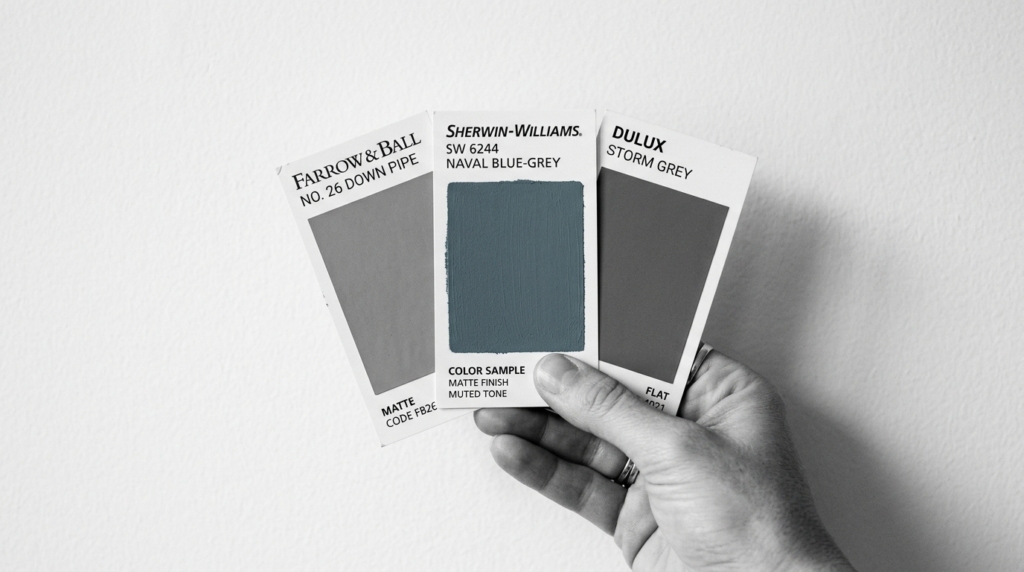
Colour 2 — Warm Grey {#warm-grey}
Grey is the most popular neutral in modern Indian interiors — but the key word is warm. A grey with pink or beige undertones (sometimes called greige) reads as sophisticated and calm in Indian bedroom conditions. A grey with blue or green undertones reads as cold and flat.
Test before committing: hold the paint chip against your existing furniture and floor. If the grey makes the floor look yellow and the furniture look dingy — it is the wrong undertone. If everything looks cohesive — proceed.
Colour 3 — Sage Green {#sage-green}
Sage green — a muted, grey-green tone — is one of the most calming bedroom colours available and works beautifully in Indian bedrooms. It complements warm wood tones (common in Indian furniture), reads as fresh without being energetic, and holds its warmth under both natural and artificial light.
The key is to choose a sage that is grey-toned rather than yellow-toned. A yellow-leaning sage reads as lime in certain lights. A grey-toned sage stays settled.
Asian Paints’ Artichoke and Jasper range offer good options. Dulux’s Reed and Sorrel fall in the same family.
Colour 4 — Dusty Rose or Blush {#dusty-rose}
A dusty rose — pink with significant grey content — creates warmth in a bedroom without being visually assertive. It works particularly well in rooms with limited natural light, where a warmer tone compensates for the absence of sunlight.
Avoid bright or saturated pinks. The tone that works is the one that reads more as a warm neutral than as pink at first glance.
Colour 5 — Terracotta {#terracotta}
Terracotta — the warm red-orange of traditional Indian pottery — is deeply compatible with Indian residential interiors. It reflects the same warm light that Indian homes receive and pairs naturally with the wood tones, brass accents, and cotton textiles common in Indian bedrooms.
Best used on a single feature wall behind the bed. All four terracotta walls in a small bedroom can feel enclosed. One wall creates warmth and focus without overwhelming.
Colour 6 — Deep Navy (Feature Wall Only) {#navy}
Deep navy on a single feature wall creates drama and depth in a bedroom without the commitment of four navy walls. It works best in rooms with adequate natural light — in a dark room, navy absorbs whatever light exists and makes the space feel smaller.
The contrast between a navy feature wall and white or off-white on the other three walls is one of the most impactful single-wall colour decisions available.
Colour 7 — Warm Beige or Sand {#beige}
Warm beige — sand, mushroom, or warm stone tones — is the understated version of off-white. It has more colour presence than off-white without the commitment of a chromatic choice. It reads as sophisticated, settles easily with warm wood and woven textiles, and ages well.
In Indian bedrooms with terracotta tile floors, warm beige is particularly complementary.
Colour 8 — Olive Green {#olive}
Darker and more complex than sage, olive green brings depth to a bedroom wall without the temperature of navy. It works particularly well in bedrooms with natural wood furniture and warm lighting. Like terracotta, it is often best on a feature wall unless the room is very large or very light.
Finish Matters as Much as Colour {#finish}
The paint finish significantly affects how a colour looks and how the room functions:
Matte / Flat: Hides surface imperfections, creates a sophisticated look, not washable. Best for rental bedrooms where walls may have minor repairs. Eggshell: Slightly sheen, wipeable, the most versatile finish for bedrooms. Satin: More sheen, very washable, can emphasise surface imperfections. Good for children’s rooms or high-contact areas. Semi-gloss / Gloss: High sheen, very washable, best for trims and accents rather than full walls.
For Indian bedrooms, eggshell or matte on walls is almost always the right choice.
For Tenants Who Cannot Paint {#tenants}
If your rental agreement does not permit painting — or you have not asked yet — the wall colour can be replicated in feel through:
Large-scale peel-and-stick wallpaper on one wall in a complementary tone. Curtains in the colour you would have chosen for the walls — large panels of sage, terracotta, or dusty rose fabric pull the room’s palette in that direction. A large rug in the desired colour anchors the floor and shifts the room’s tone without touching the walls.
Always ask your landlord before painting. Many say yes — particularly if you agree to restore the original colour before leaving.
Related read: Bedroom design for rental house India ?
Final Thought
Bedroom wall colour in India is a decision that deserves thirty minutes of careful consideration and a tested sample on the wall before committing. The right colour is the one that works in your specific room, in your specific light, with your specific furniture — not the one that looked best in a magazine photographed in Scandinavian winter light.
Test first. Paint second. Repaint if necessary. The cost of a bad colour choice is a repaint — not a permanent mistake.
More design guides for Indian homes and renters. Browse our full library ?