



Share This Article
A bad landlord in India can turn a good flat into a difficult two years. The problem is that landlords present well during the viewing — they want the flat rented, so they are on their best behaviour.
The signs that predict future trouble are usually present before you sign. You just need to know where to look.
Here are ten red flags — organised by when you are likely to encounter them.
Table of Contents
Red Flags Before Signing {#before-signing}
1. Reluctance to show ownership documents
A landlord who becomes evasive when you ask for the electricity bill or property tax receipt in their name is either not the owner or is hiding something about the property’s status. Legitimate owners have no reason to withhold basic ownership verification.
A tenant in Bengaluru near-lost ?6 lakh in 2026 because her landlord used intimidation tactics based on the assumption that she — as a foreign national — would not pursue the matter. The intimidation worked initially precisely because the landlord had no valid ownership documentation to show.
Related read: Singaporean almost loses ?6 lakh in Bengaluru landlord dispute ?
2. Pressure to decide immediately
“I have three other people interested.” “I need a decision today.” “The deposit secures your spot.” Legitimate landlords understand that a tenant needs time to make an informed decision about a home. Artificial urgency is either a pressure tactic or a sign that the landlord knows the flat will not hold up to closer inspection.
3. Asking for information that is not relevant
Requests for your caste, religion, diet, family photographs, social media profiles, or relationship status are discrimination markers. A landlord who asks these questions before renting is either planning to discriminate or has already decided and is looking for a way to articulate it without naming the real reason.
4. Refusing to answer direct questions about charges
“We’ll sort out the maintenance details later.” “The parking is flexible — we’ll figure it out.” A landlord who cannot or will not give a clear answer about total monthly cost, maintenance charges, and parking arrangements before signing is either hiding charges or has not thought them through. Either way, you will be negotiating these details from a worse position after you have committed.
Red Flags During Signing {#during-signing}
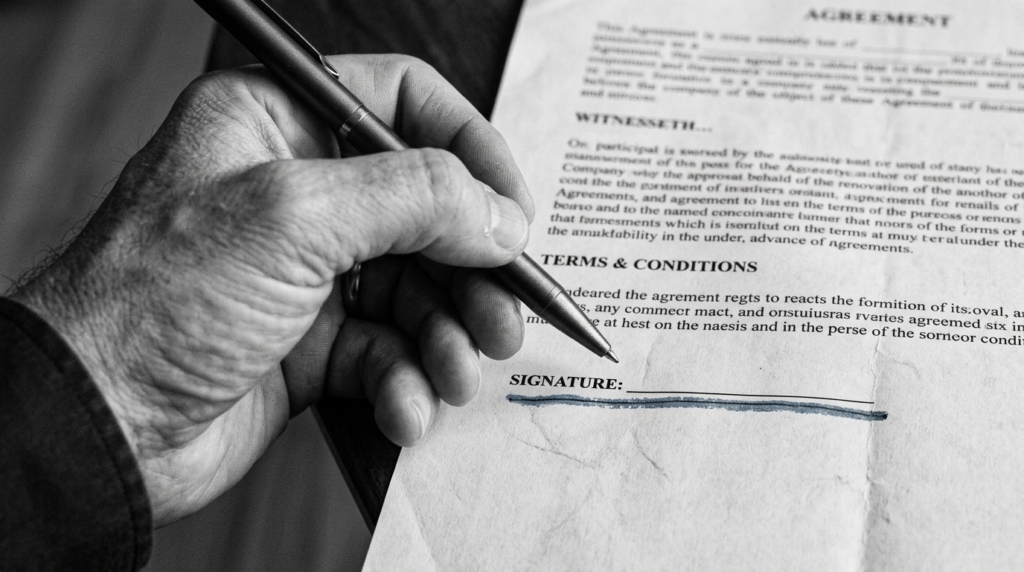
5. A one-sided agreement presented as “standard”
If the agreement has detailed tenant obligations and vague or absent landlord obligations — and the landlord says “this is the standard format” when you question specific clauses — this is a sign of a landlord who does not intend to be held to any particular standard of behaviour.
A standard format does not mean a fair format. Every clause is negotiable before signing.
6. Resistance to any amendment
A landlord who refuses to allow any change to the agreement — even minor clarifications you propose — is signalling that the terms favour them and they know it. A reasonable landlord has no objection to specifying the deposit return timeline, the entry notice requirement, or the deduction criteria. These are fair terms that should not require resistance.
7. Reluctance to provide a copy of the signed agreement
A landlord who wants both copies of the signed agreement — or who says “I’ll send you a scan later” and does not follow through — is ensuring that you have no document to refer to in a dispute. This is deliberate, not careless.
Red Flags After Moving In {#after-moving}
8. Unannounced visits in the first weeks
A landlord who establishes a pattern of “just stopping by” in the first weeks of the tenancy is establishing a precedent for ongoing access that will be harder to push back on the longer it continues. Address it immediately — in writing — when it first happens.
9. New charges appearing in the first bill
A maintenance charge, parking fee, or electricity surcharge that was never discussed appearing in the first month’s bill is a sign of a landlord who withholds financial information strategically. This is the hidden charge pattern — and it rarely stops at one new charge.
10. Personality change at the first disagreement
The most telling sign of a bad landlord: a landlord who was warm and accommodating during the viewing and signing process, who becomes hostile, dismissive, or threatening the first time you raise a concern or assert a right.
The Bengaluru viral Reddit post of 2026 described this precisely — a landlord who attended birthday parties and shared cake, who became an “inspection team-wielding auditor” the moment the tenant gave notice to vacate. The personality change at the point of financial interest is the defining characteristic of a landlord who was performing rather than behaving.
Related read: Bengaluru tenant’s viral post — birthday buddy to auditor ?
The Overall Pattern to Watch For {#pattern}
A bad landlord in India is identified not by any single red flag but by a consistent pattern: reluctance to commit to anything in writing, resistance to tenant questions about terms, and a relationship that functions smoothly only when the tenant has no needs or concerns.
The moment the tenant exercises a right — asks about the deposit return, requests a receipt, questions a charge, reports a repair — the good landlord responds reasonably. The bad landlord escalates.
You can usually identify which type you are dealing with by watching how they respond to the first minor request you make. That response predicts everything that follows.
Final Thought
A bad landlord is rarely a complete surprise. The signs are there — in how they answer questions, what they resist putting in writing, and how they respond to reasonable requests. The problem is that most tenants are focused on the flat during the viewing, not on evaluating the person who owns it.
Both matter. The flat is where you live. The landlord is who you live under.
Know the warning signs before you sign. Browse our full guide library ?