


Share This Article
It happens more often than it should. A tenant gets a call, a message, or a face-to-face demand: you need to leave. Now. Or by the end of the month. With no written notice, no clear reason, no process.
Can a landlord do that legally in India?
Almost never. And understanding why — and what you can do about it — is one of the most important things a tenant can know.
Table of Contents
The Short Answer {#short-answer}
No. A landlord in India cannot legally evict a tenant without following due process — which always includes a written notice with a specified timeline, a valid reason, and in most cases, either the tenant’s compliance or a court order before physical eviction can happen.
Locking you out, removing your belongings, cutting utilities, or showing up with people to pressure you out of the property — none of these are legal eviction. They are harassment, and in some cases criminal offences.
Valid Grounds for Eviction in India {#valid-grounds}
[IMAGE BLOCK 2 — Mid-article]
Under most state Rent Control Acts and the Model Tenancy Act framework, a landlord can initiate eviction proceedings only under specific grounds:
Non-payment of rent — typically when rent has been unpaid for two or more months. Subletting without permission — renting the property to a third party without the landlord’s written consent. Causing damage to the property — damage beyond normal wear and tear, deliberately or through gross negligence. Using the property for illegal purposes — running a business in a residential property without consent, or illegal activities. Expiry of tenancy with tenant refusing to vacate — when the tenancy has ended, proper notice has been served, and the tenant continues to stay without agreement.
Even for these valid grounds, the process must be followed. A landlord cannot self-help evict — meaning they cannot physically remove you or your belongings themselves, regardless of how valid their reason is.
Related read: Tenant rights India — 8 protections every renter has ?
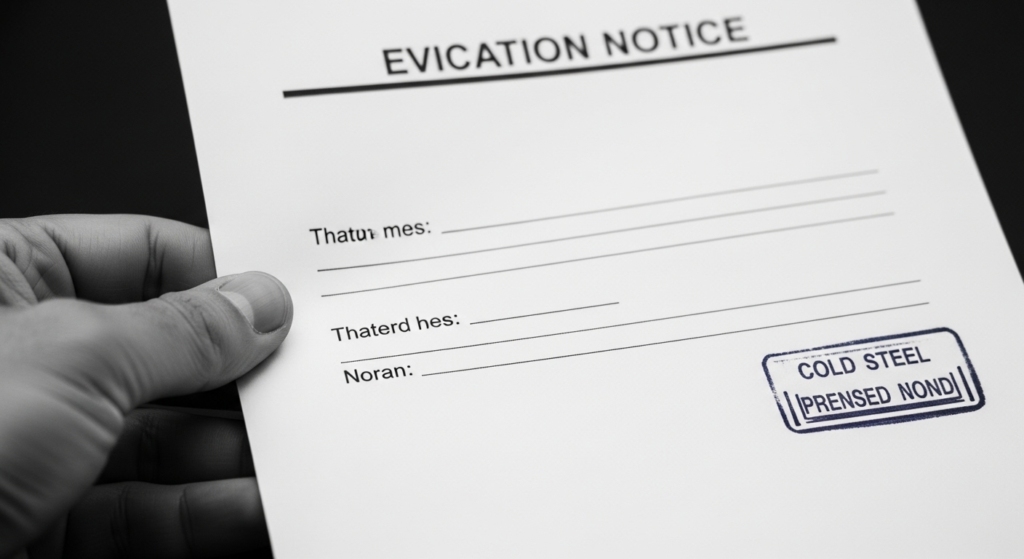
The Eviction Process — What Must Happen {#eviction-process}
For a legally valid eviction in India, the landlord must:
First, serve a written eviction notice — specifying the reason, the timeline for vacation, and the legal basis. The notice period varies by state and agreement but is typically one to three months for residential tenancies.
Second, if the tenant does not comply, file an eviction petition with the Rent Controller or appropriate court. The tenant has the right to contest this petition and present their case.
Third, only after a court order is obtained can the landlord proceed with physical eviction — typically through court-appointed officials, not self-help.
This entire process can take months or years in practice. Which is why some landlords resort to pressure tactics — because they know the formal process is slow. But those pressure tactics are themselves illegal.
What Counts as Illegal Eviction {#illegal-eviction}
Illegal eviction in India includes — but is not limited to:
Changing the locks while the tenant is away. Removing the tenant’s belongings from the property. Cutting off water, electricity, or gas to force departure. Threatening, intimidating, or physically assaulting the tenant. Showing up with a group of people to pressure the tenant out. Verbal demands to leave with no written notice and no timeline.
Each of these can be the basis for a police complaint under relevant sections of the Indian Penal Code — including criminal trespass, mischief, and criminal intimidation. The Bengaluru incident in March 2026, where a tenant-landlord dispute over a rent increase turned physically violent within five days of move-in, is a documented example of what happens when these lines are crossed.
Related read: Bengaluru rent dispute turns violent — what tenants must know ?
State-Specific Rules That Matter {#state-rules}
Karnataka: The Karnataka Rent Control Act, 2001 governs evictions in the state. It specifies valid grounds, notice requirements, and the Rent Control Court as the adjudicating authority.
Maharashtra: The Maharashtra Rent Control Act, 1999 applies. Eviction requires a court order under most circumstances. Tenants under leave and license agreements have a somewhat simpler eviction path for landlords — but even then, notice and process are required.
Delhi: The Delhi Rent Control Act applies to most residential properties. Notice requirements and valid grounds are similar to other states. SPUNER — the Special Police Unit for the North East Region — specifically handles eviction-related harassment of northeast residents in Delhi.
All states: The India Code portal lists state-specific rent control legislation for your reference.
What to Do If You Are Being Illegally Evicted {#what-to-do}
Stay calm and document everything immediately. Photograph the notice — or document that no notice was given. Screenshot messages. Record dates and times of any verbal demands.
File a complaint at your local police station if the landlord is using physical force, intimidation, or cutting utilities. Cite the relevant IPC sections — criminal trespass (Section 441), criminal intimidation (Section 503), and mischief (Section 427) where applicable.
Approach the Rent Controller or Rent Authority in your area. This is the designated body for landlord-tenant disputes in most states. File a complaint and request an interim order if the situation is urgent.
Do not vacate under pressure before taking legal advice. Vacating under pressure — even if you intend to fight the eviction — can be seen as voluntary departure and weaken your legal position.
Contact a tenant rights organisation or lawyer if the situation escalates. Many states have legal aid services that can assist at low or no cost.
Related read: What landlords cannot do in India — the complete list ?
Final Thought
Can a landlord evict you without notice in India? No. Not legally. Not validly. Not without a process that involves written notice, valid grounds, and in most cases a court order.
What landlords can do — and sometimes do — is create enough pressure that tenants leave before discovering any of this. That pressure works only when tenants do not know the law.
Now you know.
Know your rights before your landlord tests them. Browse all tenant guides ?