



Share This Article
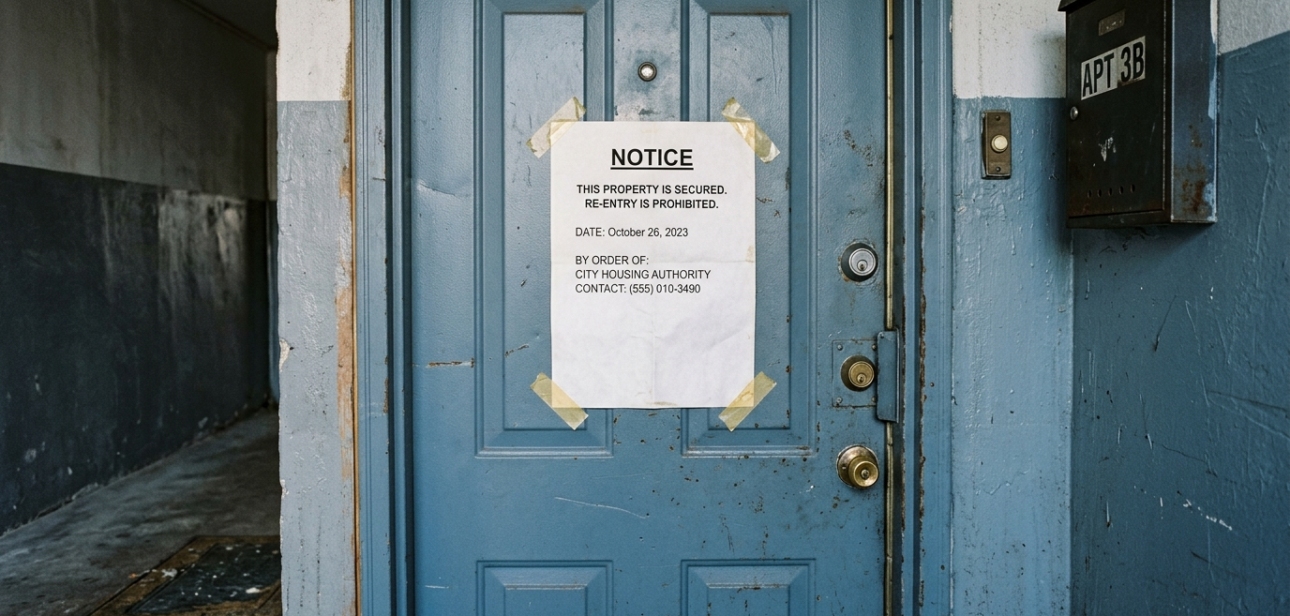
The landlord wants you out. He says you have a week. Or two days. Or he has already changed the lock.
Can he do this legally?
In almost every case in India, no. A landlord cannot evict a tenant without notice, without valid legal grounds, and without a court order in most circumstances.
Here is what the law actually says.
The Legal Framework for Eviction in India
Eviction in India is governed by the Transfer of Property Act 1882, state-specific Rent Control Acts where applicable, and the terms of the tenancy agreement.
In states with active Rent Control Acts — Maharashtra, Delhi, Karnataka, Tamil Nadu, West Bengal — the landlord must establish valid legal grounds for eviction and typically must obtain a court order before the tenant can be forcibly removed.
The Model Tenancy Act 2021, in states that have adopted it, also requires formal eviction proceedings through the Rent Authority before a tenant can be removed.
What Are Valid Grounds for Eviction?
Common valid grounds across most state rent control laws include: non-payment of rent for two or more months, the tenant has sub-let the property without permission, the property is being used for illegal purposes, the tenant has caused damage to the property, the landlord genuinely needs the property for personal or family use, the building needs demolition or major reconstruction.
Simply wanting the property back, needing to sell, or a personality dispute is generally not a valid ground for immediate eviction under rent control law.
The Correct Legal Process for Eviction
Step one: The landlord must issue a formal notice to the tenant stating the grounds for eviction and giving the tenant time to remedy the situation (usually 30 to 60 days, depending on the state and the ground).
Step two: If the tenant does not vacate or remedy the issue, the landlord must file an application with the Rent Control Court or civil court, depending on the state.
Step three: The court will hear both sides and, if the landlord’s case is valid, issue an eviction order.
Step four: Only after a court order can the landlord take steps to recover possession. Even then, the actual physical eviction may require assistance from the court or police.
What Counts as Illegal Eviction?
Changing the locks without a court order. Removing the tenant’s belongings. Cutting off water, electricity, or gas to force the tenant to leave. Physically threatening or intimidating the tenant. Any attempt to force vacation without following the legal process.
All of the above are illegal in India, regardless of whether the landlord believes they have valid reasons to want the tenant out.
What to Do If You Face Illegal Eviction
Do not voluntarily vacate under pressure. Document everything — take photos, record conversations if possible, save all messages.
File a complaint at the nearest police station, citing criminal trespass or intimidation where applicable. Approach the Rent Control Court or Rent Authority for an injunction preventing the landlord from disturbing your possession.
If your state has adopted the Model Tenancy Act, file a complaint with the Rent Authority immediately.
In urgent cases, a lawyer can apply for emergency relief from the civil court, including a stay on any eviction attempt.
If You Are Outside Rent Control
If your property is not covered by your state’s Rent Control Act — for example, high-rent urban properties in some states — the standard civil law applies. The landlord must still serve notice and follow the agreement terms. Forcible eviction is still illegal. The appropriate route is civil court, not self-help.
Internal links: https://dwellble.com/blog/bengaluru-landlord-tenant-disputes-law, https://dwellble.com/blog/notice-period-tenants-india, https://dwellble.com/blog/tenants-rights-india-complete-guide
External links: nalsa.gov.in, indiacode.nic.in (Transfer of Property Act)